Core Risks Identified
- The Physical Patch Bay Trap (Infrastructure Over-Building): Engineering teams may instinctively try to design high-density BNC jackfields and physical copper patch circuits to route around peripheral devices or isolate monitoring lines. In an ST 2110 environment, signals exist as virtualized multicast packet streams inside a network switch fabric, making physical patching impossible and resulting in wasted capital expenditure and physical infrastructure bloat.
- Fragmented Blueprint Bloat (Documentation Inefficiency): A reliance on legacy documentation habits can lead to blindly generating individual, disconnected floorplans and drawings just to check off a traditional drawing list. This results in empty drawing overhead, diluted design efficiency, and a fragmented understanding for both the engineering team and the client.
- Operational Blindspots via Missing Software Telemetry: Failing to establish a dedicated software monitoring fabric (such as permanent telemetry probes, hardware packet-capture nodes, and integrated NMOS trace tools) leaves engineers unable to logically isolate or monitor virtualized paths, fundamentally crippling troubleshooting capabilities.
Risk Value
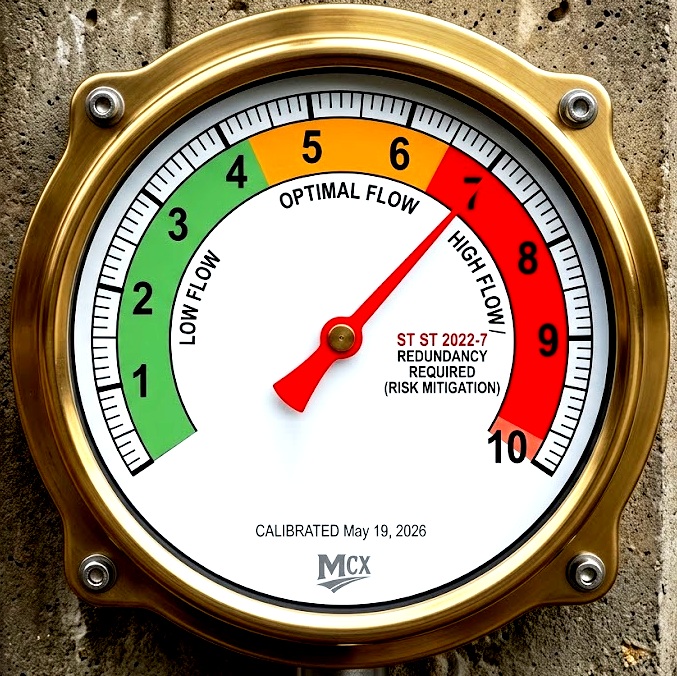
Risk Score: 7 / 10
Justification: While these risks do not necessarily represent an immediate physical safety hazard, a 7 reflects a high financial, operational, and scheduling risk. Transitioning to ST 2110 using a legacy baseband mindset introduces systemic design flaws. If the engineering team fails to pivot to virtual telemetry and consolidated data-dense documentation early in Phase 1, the project will likely suffer from severe budget overruns due to physical infrastructure bloat, alongside significant post-commissioning operational delays caused by a lack of proper software visibility tools.
UPDATED
5/19/26
V260519-1.0